
7 Best Speakers For Classical Music 2026
Music Industry How To is supported by readers. When you buy via a link on our site, we’ll possibly earn an affiliate commission at no additional cost to you.
Listening to a live orchestra in a performance hall is one of the most immersive experiences a music fan can take part in. Unfortunately, this experience doesn’t always translate well to instances of home listening.
If you’re a fan of classical music, you’re probably on the search for a good set of speakers to help deliver a listening experience of similar quality. All of the following are excellent choices, with options for both audiophiles and casual listeners.
Contents
KEF LS50 Meta – Best Overall

If you’ve done any moderate searching at all, you’ve likely come across the KEF LS50 Meta. This pair of speakers has had an immense amount of hype over the last few years.
While hype is not always a good indicator of quality, it seems as if the consensus is that the LS50 Meta does meet expectations. This Meta version is essentially the 2nd generation of the LS50 that gained so much attention when KEF debuted the speakers at a Hi-Fi show.
The LS50 Meta consists of 2 bookshelf speakers with a very compact 13cm speaker. While this might seem fairly small at first glance, you’ll be pleasantly surprised at what the LS50 Meta can do sonically.
One of the biggest upgrades of this 2nd generation is in KEF’s use of its patented Metamaterial. This helps to significantly cut down on noises that may be present at the back of the speaker’s driver.
To help aid in the reduction of unwanted noises, the LS50 Meta is equipped with a Dough Moulding Compound on the baffle, which is combined with excellent damping material. You’ll find that this significantly cuts down on vibrations while providing a high degree of transparency without coloration.
In terms of frequency response, the LS50 Meta has a range of 47Hz to 45kHz. The speakers seem to handle bass very well while providing a smooth treble that has a gradual roll-off at the higher frequency spectrum.
One thing you may want to keep in mind is that it may take a bit of time to find the right distance between each speaker to reduce time lag. However, once you find that sweet spot, the LS50 Meta will provide an immersive 3-D sonic landscape that you won’t be able to help but become lost in.
Because these are passive speakers, you will want to use them in conjunction with an amplifier. KEF recommends amplifiers with at least 40 to 100W, though some testers have found great luck with the lower wattages of tube receivers.
Sure, the LS50 Meta definitely isn’t the most affordable set of speakers on the market. However, it has proven to be a marvel of technology in providing superb, audiophile-approved sound quality without breaking the bank.
In fact, just about everybody agrees that the LS50 Meta is the best set of speakers currently on the market. It has won numerous awards for its performance value per cost.
PMC 6-2 – Best Premium
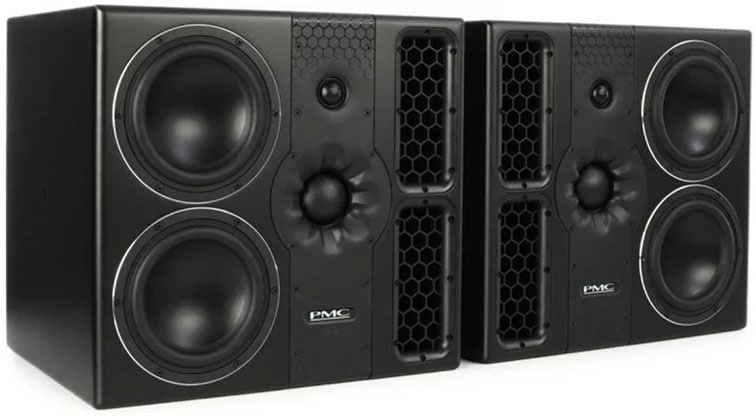
Some audiophiles have no problem spending used car prices for the best speaker setup they can get their hands on. It might be a bit unconventional, but the PMC 6-2 is a fantastic setup for its staggering price.
The 6-2 is traditionally used in recording studios, however, the apt audiophile will likely find no issues using this as a home setup. Each speaker in this pair of monitors is stacked with a 55mm midrange, a 27mm tweeter, and a pair of 150 woofers, all of which are rated for 400W and are powered by ICEPower Class D amplification.
To say that the 6-2 is a loud unit is an understatement, however, it does perform exceptionally well at any volume you may wish. With a frequency response range of 33Hz to 25kHz, every little detail you could ever hope to hear will be present with astonishing clarity.
What makes this unit so recommendable for classical music is its response in the bass range, which is largely owed to PMC’s use of Advanced Transmission Line technology. You will have no issues hearing even the lowest of notes in any classical music recording of your choosing.
There are some things you will want to be aware of, but most of these are fairly commonplace if you are familiar with Hi-Fi setups. The first is that these speakers have been suggested to allow for at least 50 hours of use before they are thoroughly broken in for optimal use.
Secondly, you will definitely want to make sure that your listening room is large enough to accommodate the sonic landscape the 6-2 provides. It is commonly recommended to allow at least a 5ft. distance between each speaker for the ideal sound.
The 6-2 definitely isn’t going to be for everybody, and some serious audiophiles may even question whether it’s worth their time. However, these monitors are some of the best a recording studio could ever buy, making them elite choices for those who have pockets deep enough to justify their purchase.
Edifier R1280T – Best Budget
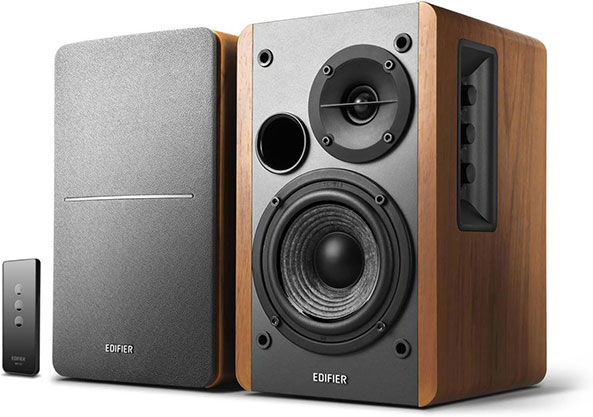
Let’s face it, not everybody has a sizable budget to be able to plonk down a hefty wad of cash for a respectable set of speakers. While it might be sacrilegious to say, some people do not even have a want or desire to have the best speakers on Earth to listen to music.
If this is you, then the market is essentially wide-open with its vast range of different options. One of the most popular choices for those who have smaller budgets and still desire excellent audio quality is the Edifier R1280T.
This pair of speakers is designed to be used on a desktop, making them perfect for use with a computer. It’s important to note, however, that the functionality of the R1280T is not just limited to this use case.
Each speaker of the R1280T comes with a 13mm tweeter with a silk dome and a 4-inch woofer. One of the nice things about the R1280T is that Edifier gives you the option to easily remove its grille covering depending on your aesthetic preferences.
The speakers themselves connect via traditional speaker wires plugged into positive and negative terminals. There’s no need to head out to the store as Edifier has conveniently provided speaker wire with the R1280T.
It’s important to note that the right-hand speaker powers the entire pair, and comes equipped with a handy interface for level adjustment. You’ll be able to dial in your EQ with its treble and bass knobs, as well as the overall volume with its respective knob.
At the back of the powered speaker, you’ll find a pair of RCA inputs. One is designated for PC while the other is for an additional auxiliary connection, meaning you can have 2 sound sources plugged in at all times.
Again, while one of the inputs is labeled for PC, you can use this with any source granted you have an RCA cable with a corresponding connection (usually either 1/4” or 1/8”). This means you could easily plug your mobile phone or other devices into the speakers for audio playback.
Once again, Edifier has gone the extra mile to provide different RCA cables that you will likely put to good use. One of these supports an RCA-to-RCA connection, with the other being RCA-to-1/8”.
Another feature that Edifier has included is a remote control. This is pretty limited with what it can do, but you will at least be able to control the volume when you’re at a distance from the speakers.
Something to note about the volume, however, is that the R1280T has been shown to distort at its loudest volumes. Whether you have the need to play classical music that loud is going to be dependent on you, so this may or may not be a big deal.
It might be a bit of a deal breaker for some folks, but the R1280T does not come with Bluetooth connectivity. However, any audiophile will tell you that this is okay, as Bluetooth cannot facilitate lossless audio without some compression.
Overall, the R1280T is a fine example of a pair of budget speakers that outperform many of its contemporary rival products. It certainly won’t be for serious audiophiles, but any casual music listener who likes to utilize speakers for multiple things will find these to be quite pleasing.
Plus, it must be said that, while Edifier seems to have prioritized performance, aesthetics have been given equal attention. The wooden housing is sure to look classy in any room you put the speakers in.
Should you find that the bass response is a little lacking in taste, many have found that pairing the speakers with a subwoofer gets the job done. The nice thing is, since these speakers are so inexpensive, this can be done without spending much more money than you already are.
Barefoot Sound Footprint 01
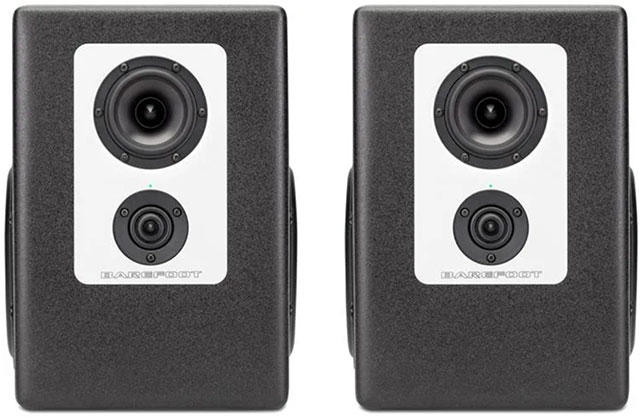
In recent years, the market has become increasingly saturated with speakers that simply will not get the job done in meeting an audiophile’s needs. Many turn to setups that pros use in recording studio control rooms.
One setup that performs exceptionally well is the Barefoot Sound Footprint 01 (see price on Sweetwater, Amazon). If you liked what the aforementioned PMC 6-2 had to offer, but can’t muster its hefty price tag, the Footprint 01 might just be what you’re looking for.
The Footprint 01 is an active setup that features 2 monitors in a 3-way design. Each monitor has a 1” radiator tweeter, a 4” midrange driver with an aluminum cone, and a pair of 8” Dual-Force subwoofers that face in opposite directions.
There’s plenty of power here too, with 500W of Class D amplification being delivered to the subwoofers, and 150W being delivered to the other speakers. Boasting a frequency range of 36Hz to 45kHz, you’re going to hear things that you’ve never heard before in recorded mixes that you thought you were familiar with.
Because of this massive range, it’s a likely bet that you would feel quite satisfied with its sound, even without the need for a dedicated subwoofer. That, alone, is commendable, especially considering the price of investment you’d need to fork over just for this pair of monitors.
The Footprint 01 has some unique technology under the hood that could help seal the deal in your favor. Barefoot Sound has incorporated what is known as Multi-Emphasis Monitor Emulation into its design.
Ultimately, what this means is that you’ll be able to attenuate the monitors to respond and perform with different biases. You can choose between either Flat, Hi-Fi, and even the sound of the classic NS10, all through the power of emulation.
At the end of the day, the Footprint 01 is quite a powerful monitor setup that remains relatively small, ensuring that your listening space remains tidy in aesthetic value. It is a little pricey, but it is safe to say that these speakers will allow you to become truly immersed in the sound of a full orchestra, in a way you might never have heard before.
Klipsch RP-8000F
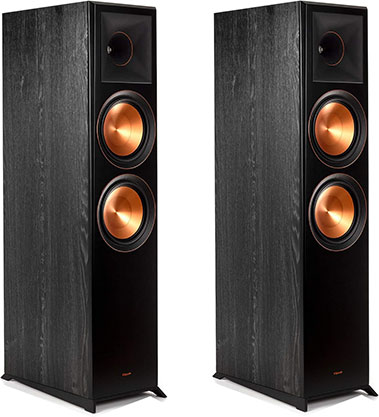
Looking for one of the best pairs of floor stand monitors for your Hi-Fi setup? You’ll definitely want to take a look at the Klipsch RP-8000F.
Klipsch has packed quite a bit of technology into these speakers to ensure that they remain unmatched in many different areas. For starters, each floor stand monitor consists of a 1” Titanium tweeter and a pair of 8” woofers.
The tweeter itself features a vented design, with its Titanium composition being far superior to other materials often found in tweeter designs. Furthermore, the tweeter’s horn is equipped with molded silicon to help with the response, providing a smooth treble.
The woofers are phenomenal and manage to really bring out the full spectrum of the mid and lower-range frequencies. Part of what makes this so effective is the fact that each cabinet has a Tractrix port at the back, which allows for optimal airflow to minimize unwanted distortion and helps to project its sound.
Another aspect that helps cut down on vibrational noise is its aluminum feet, which feature a rubber coating.
Make no mistake about it, the RP-8000F is definitely not a small speaker package. These towers are going to be a prominent fixture in any room that you place them in.
With that being said, you should be forewarned that there is a risk that these could be damaged in shipping. This tends to be a common complaint among owners, though this isn’t necessarily the fault of Klipsch’s manufacturing process.
Overall, the RP-8000F is one of the best-rated floor stand speaker setups on the market. Everyone who owns this setup tends to agree that its audio output is downright incredible, especially for the cost.
And really, aside from the overall quality, the cost is one of the reasons why the RP-8000F is so commendable. It easily rivals the sound quality of speaker setups that run 2 or 3 times the cost of admission.
Bowers & Wilkins Formation Wedge
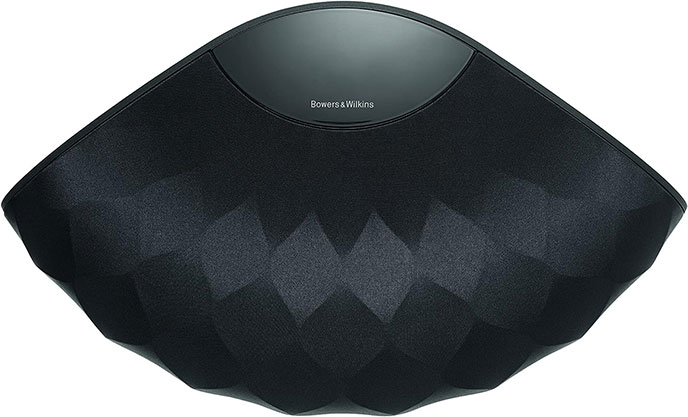
Are you looking for a modernized speaker solution that is incredibly chic and sure to add aesthetic value to your space? You may want to take a look at the Bowers & Wilkins Formation Wedge.
While the Formation Wedge won’t necessarily be the choice most audiophiles would choose, it’s perfect for any casual listener who wants to dress up their home. Plus, it’s one of the most unique speaker designs on the market, and could very well set a trend that other manufacturers may mimic in years to come.
Part of what makes the Formation Wedge so unique is the fact that it has somewhat of an elliptical shape, providing sound in 120 degrees of space. This means you’ll be able to stash it in a corner to fill the sound of a room or pair it with another Formation Wedge or other speakers in the Bowers & Wilkins lineup to shape the sound of your room to perfection.
There’s quite a bit at play underneath the futuristic-looking grille pattern. Inside of the Formation Wedge, you’ll find:
- 6” woofer powered by an 80W Class D amplifier
- A pair of 3.5” FST midrange drivers
- A pair of 1” tweeters with double-domes
Because of its elliptical design, Bowers & Wilkins have designed this speaker to truly create a 3-D soundscape. Each driver is angled accordingly, ensuring that every direction of the speaker’s orientation is producing sound.
Listeners who like to take advantage of current technology will love the features that come included with the Formation Wedge. For starters, you’ll be able to control the speaker with Amazon’s Alexa, which, in turn, can grant you access to various subscription-based streaming and radio services if you should decide to go down that route.
However, even if you don’t wish to use Alexa, the Formation Wedge will still allow you to utilize various subscription services. The speaker has built-in Wi-Fi and Bluetooth capabilities, allowing you to connect without having to use a cable.
Wondering what kind of sound quality the Formation Wedge can output? You’ll be pleased to know that the streaming of 24-bit, 96kHz quality is fully supported.
Again, this probably won’t be the audiophile’s first pick, especially considering the price. However, it serves as an excellent speaker solution that provides excellent aesthetics and a surprisingly good sound image with plenty of bass when needed.
Of course, there are some drawbacks that you should be aware of. First and foremost, there are no auxiliary connection inputs, meaning you are practically limited to using Bluetooth.
Secondly, some people have found that the fact that no remote control is included is a bit of an annoyance. Thirdly, you may end up having to plunk more down for other products in the Formation lineup to really make the most of this.
Being limited to one company’s range of products for a stereo setup can be a massive deal breaker for some people. However, it is safe to say that the products in this lineup are unmatched when it comes to aesthetic value.
KRK ROKIT 5 G4
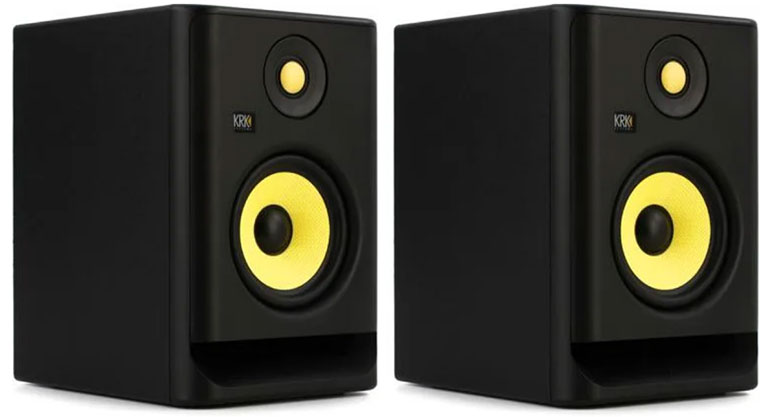
Have a relatively modest budget, but looking for a pair of monitors that have performance capabilities far beyond their price point? The KRK ROKIT 5 G4 (see price on Sweetwater, Amazon) is one of the best value buys on the market.
These monitors are specifically designed for use in home recording studios. With that being said, there’s really no reason why you wouldn’t be able to use this setup with your home stereo.
Despite being relatively affordable, KRK has seemingly gone the extra mile in almost every avenue when designing this pair of monitors. This is not only apparent in its aesthetic qualities, but in the small details that make the world of a difference, too.
For starters, each monitor is equipped with a 1” tweeter and a 5” woofer, which are powered by 55W of Class D amplification. Both of these speakers feature Kevlar in the driver design, which adds an immense amount of durability with a bit of aesthetic flair, too.
With a frequency response range of 43Hz to 40kHz, you’ll find the ROKIT 5 G4 is incredibly balanced, with plenty of smooth highs and punchy, present lows. One aspect that makes the bass frequencies come alive is the fact that its port is at the front of the speaker, rather than at the back as is so often found with other speaker designs.
At the back of the ROKIT 5 G4, you’ll find that there is a handy LCD screen, which allows you to attenuate the EQ and other settings to fit the parameters of your room. When you use KRK’s mobile application, you’ll be able to really reap the full power of these speakers and figure out the optimal setup for your room with no headaches involved.
Another important feature of the ROKIT 5 G4 is the fact that the bottom is equipped with a dampening material. Whether you have these on a floor stand or a desktop, you’ll be able to crank up the volume without dealing with excessive vibration and associated unwanted noises.
While it isn’t necessarily a prominent feature, the KRK logo on the front of the speaker even has its own function. The logo lights up when the speakers are powered on and will fade in flashes when they are powered on but no sound has gone through them in a duration of time.
At the end of the day, the ROKIT 5 G4 proves that you don’t necessarily need to spend an arm and a leg for superior audio quality. Just about everyone who owns a set agrees that these are true gems and perform above the class of their price point.
What To Look For When Buying Speakers For Classical Music
Not really sure where to begin when it comes to buying a speaker setup for your classical music listening sessions? Fear not, the following section will give you some things to think about.
Because everyone’s needs will be different, you will need to do your own research to find exactly what is right for you. The following points will guide your thinking process and outline some areas that you will need to give extra consideration.
Budget
If this article has illustrated anything, it’s that speaker setups can cost an unfathomable amount of money. Yet, what’s even more perplexing is that there are people in the world who wouldn’t think twice about spending that kind of money for superior audio quality.
Defining your ideal budget for a speaker setup is going to be one of the most important things you do. In fact, you should do this before you even start looking around at speakers.
To help you in this process, it’s ideal to think about how invested a listener you are. Do you consider yourself a casual listener, or do you lean more toward having a dire need for the best audio quality possible because your ears are tuned that way?
If you’re somebody who primarily just likes to have music on in the background, spending even $1000 probably isn’t going to make much sense. On the other hand, if you’re an active listener who takes listening sessions seriously on a regular basis, this kind of cost might be justified.
Consider Your Room
It might seem like a no-brainer, but once you have an idea of your budget, you’ll need to think about the room you’ll be placing the speakers in. The proper sound design of a room will ensure that you can get the most out of the speakers you eventually purchase.
While it might seem like common sense, you will want to purchase speakers in accordance with the room size. Buying a massive speaker system that performs best with a decent amount of distance between each speaker cabinet will do nothing for you if the room cannot accommodate that kind of space.
Along with that, you may also want to take into account whether you have any soundproofing panels in the room. This can help to prevent sound waves from bouncing all over the place, minimizing distortion in the ear as a result.
To be frank, this is an area that requires a bit of technical know-how. It’s recommended that, once you have a few speaker setups in mind, you contact a professional to give you some guidance on which speaker setups will work best for the allotted amount of space in your room.
Type Of Speaker
There are a few different designs that you will likely want to consider when purchasing speakers for your stereo setup. These range from:
- Desktop monitors
- Bookshelf speakers
- Floor stand speakers
Again, this decision will usually play into the amount of space you have in your intended listening room. However, you will also want to consider whether you will have multiple uses for the speakers themselves.
If you’re like me, you might want to utilize these speakers for the purpose of recording, mixing, and mastering, in addition to serious listening. Having multiple uses for your speakers could make a more expensive option a bit more justifiable in the end.
Along with that, you need to be aware that there are both active and passive speakers. Speakers require amplification to work, and active speakers will have an amplifier built into the unit to drive the speakers.
However, many audiophiles prefer to go for passive speakers. This allows them to utilize the amplifier of their choice, though there does need to be thought given to whether the amplifier can supply the ideal amount of power to each speaker driver.
Frequency Range
Recorded classical music tends to cover a broad spectrum of frequencies, many of which are lost in common speaker designs. When purchasing a speaker setup specifically for classical music, you will want to find something that has a frequency range as close to 40hz (or lower) to 20kHz as possible.
While it might not always be possible to find 1 speaker setup that covers this range, keep in mind that speakers can always be supplemented. Many audiophiles will add an additional subwoofer to their setup for expanded bass frequency ranges.
Along with that, you will want to pay attention to whether or not the speakers add any coloration to the sound. It’s usually best to aim for something with a flat response and an EQ that allows you to attenuate accordingly.
Aesthetics
Last but not least, you will want to ensure that the aesthetics of your speaker setup match your tastes and the decor of your room. While looks aren’t everything, it’s safe to say that having a good-looking set of speakers can really complete the visual aspect of any listening experience.
In general, it’s best not to place too much emphasis on aesthetics over performance. Fortunately, most worthwhile speaker setups will have a respectable aesthetic value that can fit any room’s decorative design.
Best Brands For Classical Music Speakers
There is a ridiculous amount of speaker setups available on today’s market. While having this many options is great, it unfortunately makes it difficult for someone to discern what is actually worth the time and money.
The research you do for any serious investment like this would bode well by at least being aware of some of the best brands in the industry. While it isn’t necessary to purchase speakers from these manufacturers, you can use their products as a sort of measuring guide to ensure that your choice measures up to the standard.
Klipsch
Klipsch has historically been one of the biggest and most reputable names when it comes to high-fidelity speaker setups. This American company was founded in 1946 and was one of the prominent originators of the horn speaker design.
Today, Klipsch is still a household name and has expanded its product line to include speaker setups for home and theater uses. Some audiophiles feel that their products have dropped off in quality a bit since they were purchased by Audiovox in 2011, but truthfully, Klipsch’s speakers are still considered to be the cream of the crop.
KEF
KEF is a very popular British speaker manufacturer and has continually innovated the industry since its start in 1961. This company was the very first to incorporate the use of computer-aided technology with its speakers, which is a trend that is commonplace in today’s climate.
Every decade of KEF’s existence has seen new patents that push the entire industry forward. In the current decade, KEF remains at the top of the pack with its patented Metamaterial Absorption Technology.
Best Speakers For Classical Music, Final Thoughts
While some speakers can certainly cost a pretty penny, there’s nothing more satisfying than coming home after a long day and being fully immersed in the sound of an orchestra. Only the best speakers on the market can really deliver that feeling of being in an orchestral hall.
But, like anything else, you will need to do some serious thinking about your personal listening preferences. Otherwise, you may be spending more than you need for quality that is satisfactory to your tastes.
P.S. Remember though, none of what you’ve learned will matter if you don’t know how to get your music out there and earn from it. Want to learn how to do that? Then get our free ‘5 Steps To Profitable Youtube Music Career’ ebook emailed directly to you!


